Microalgal Biodiesel
Reducing production costs through process integration
Click a page to enlarge.
We investigated why microalgal biodiesel production remained commercially uncompetitive in India despite favourable growing conditions and government support for biofuels.
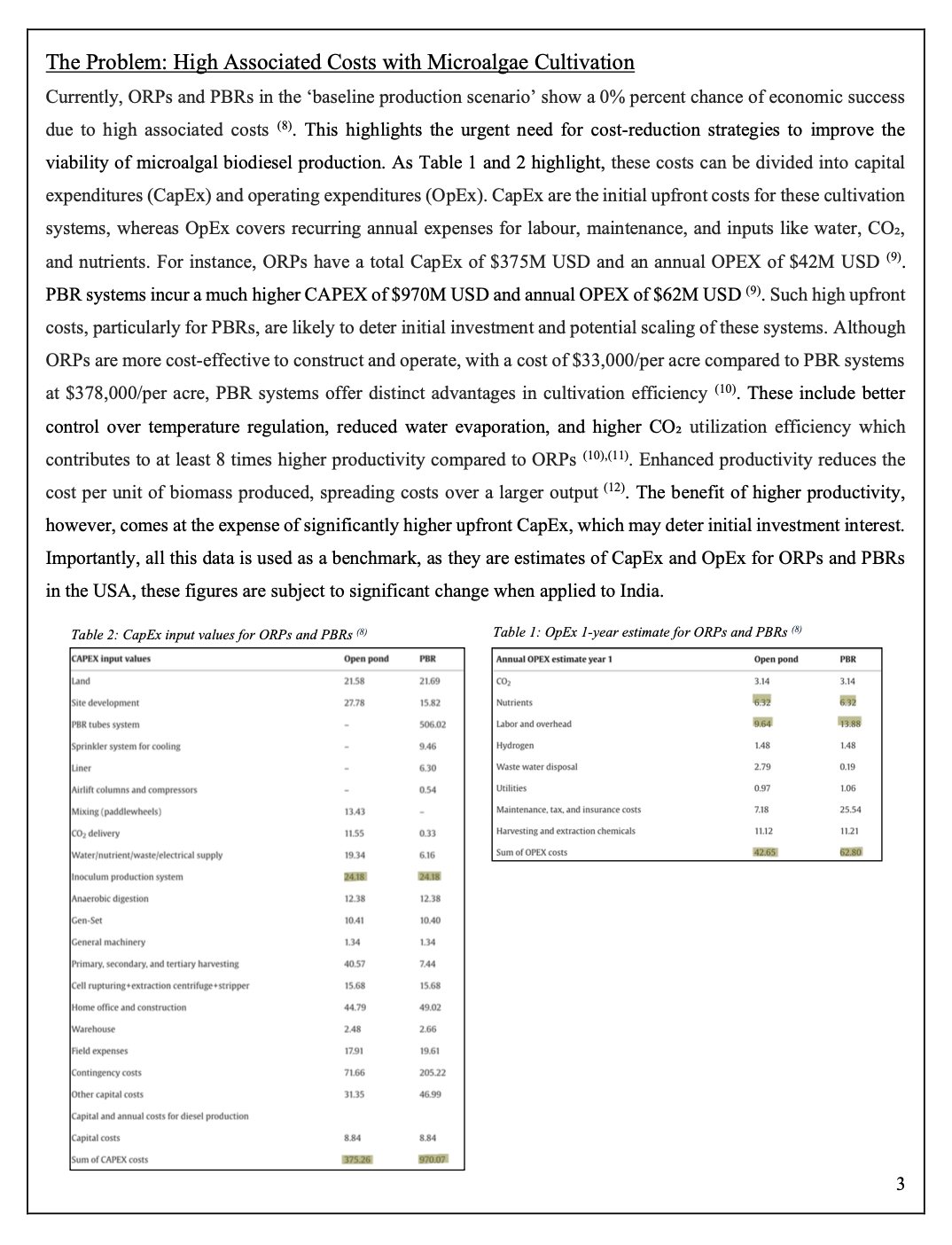
We compared the capital and operating costs of open raceway ponds and photobioreactors. The analysis identified recurring costs for water, nutrients and carbon dioxide as barriers to large-scale production.
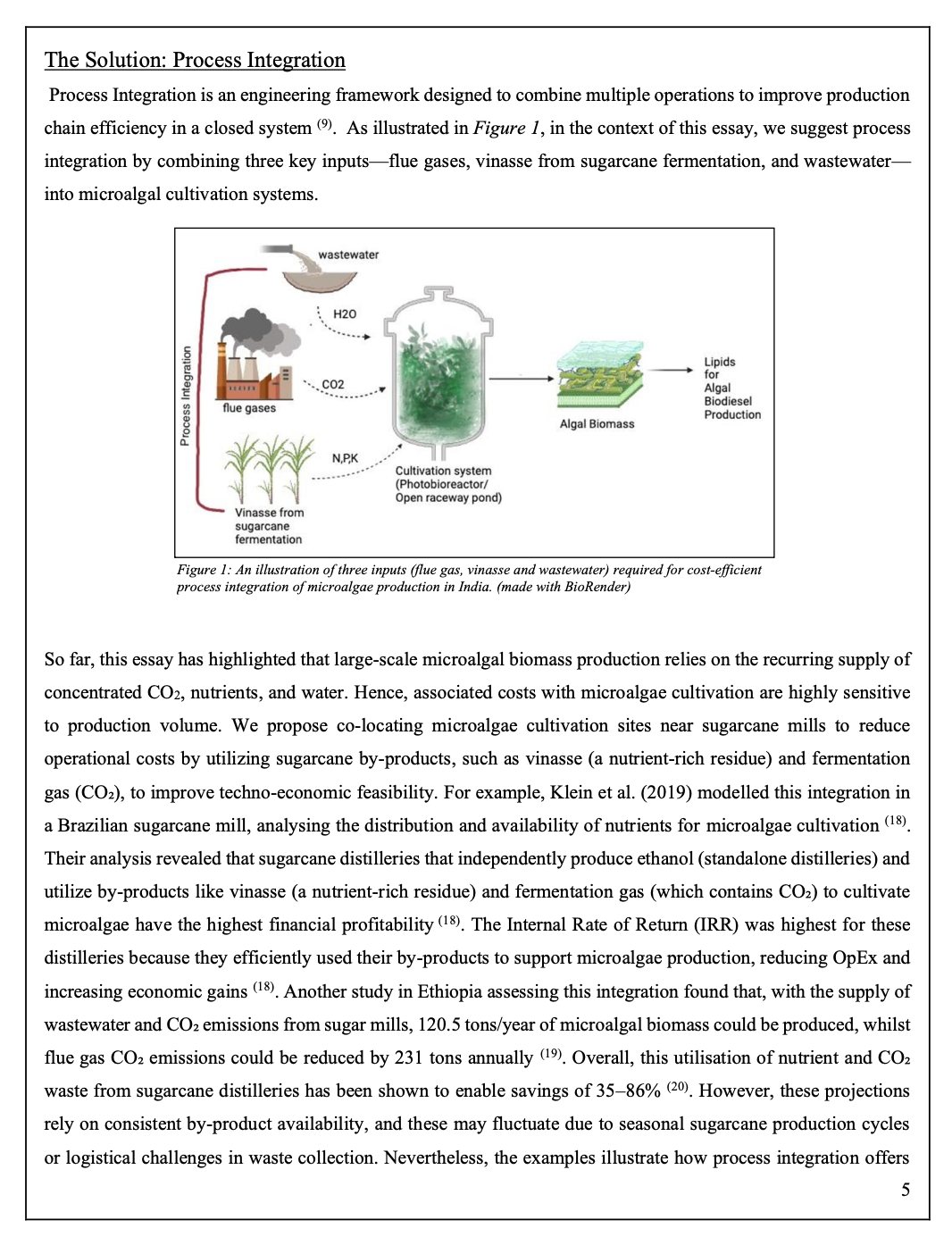
We proposed integrating microalgae cultivation with existing sugarcane distilleries and wastewater treatment facilities. Sugarcane processing produces carbon dioxide and nutrient-rich residues that could supply inputs for microalgae cultivation, reducing dependence on separately purchased resources.
We examined evidence from Brazil, Ethiopia and Spain to assess the technical and economic basis for the proposal, then identified Tamil Nadu as a suitable location for a regional pilot because of its sugarcane industry and wastewater reuse policy.
Lecturer feedback